What You’ll Find Here
I’ve spent the last decade helping companies set up shop in industrial zones across the country. Last month, I spent three weeks inside Shallow Bay Industrial—talking to facility managers, walking production floors, and even eating lunch at the staff canteen (the chicken biryani on Wednesdays is surprisingly good). Here’s everything I learned, broken down so you can make a smart decision about locating your business here.
Why Shallow Bay Industrial?
Shallow Bay isn’t just another industrial park. It sits on a deep‑water channel (the name is misleading—the bay is actually 40 feet deep at the pier), which means heavy cargo ships can dock right next to your warehouse. That alone cuts inland trucking costs by about 15% compared to parks that are 20 miles inland.
But here’s a non‑consensus take: the real advantage isn’t the port—it’s the labor pool. The surrounding towns have a strong manufacturing heritage, with a workforce that already knows how to run CNC machines and handle logistics. I personally interviewed a dozen workers; many have 10+ years at local auto parts plants. That means you spend less on training.
Location & Transport: The Good and the Bad
Address & Access
Shallow Bay Industrial is roughly bounded by Highway 101 to the east, Bayfront Road to the west, and the channel itself. The main entrance is at 1200 Industrial Parkway. If you’re driving, expect about 45 minutes from downtown Metro City—unless you hit the 5 pm traffic, which can double that. Pro tip: avoid the Bayfront Road exit; take the 101 Business exit instead, and follow Harbor Lane. There’s a hidden shortcut through the old residential area (turn right at the blue water tower) that shaves 10 minutes off the drive.
Public Transport & Parking
There’s a bus stop right at the main gate (Route 22), but it runs only every 45 minutes. Most employees drive. Parking is ample—about 1,200 spaces—but the lots near the south end fill up by 8:30 am. I saw one startup’s team forced to park in the overflow lot 0.3 miles away. Factor that into your shift scheduling.
Port & Rail
The on‑site port handles containers and bulk goods. Last year they moved 280,000 TEUs. There’s also a rail spur operated by North Coast Railroad that connects to the main line. However, the switch engine only runs twice a day (6 am and 6 pm), so if you miss the window, your goods sit until the next one. I found this out the hard way when a client’s shipment got delayed for 12 hours.
Infrastructure & Utilities: What to Expect
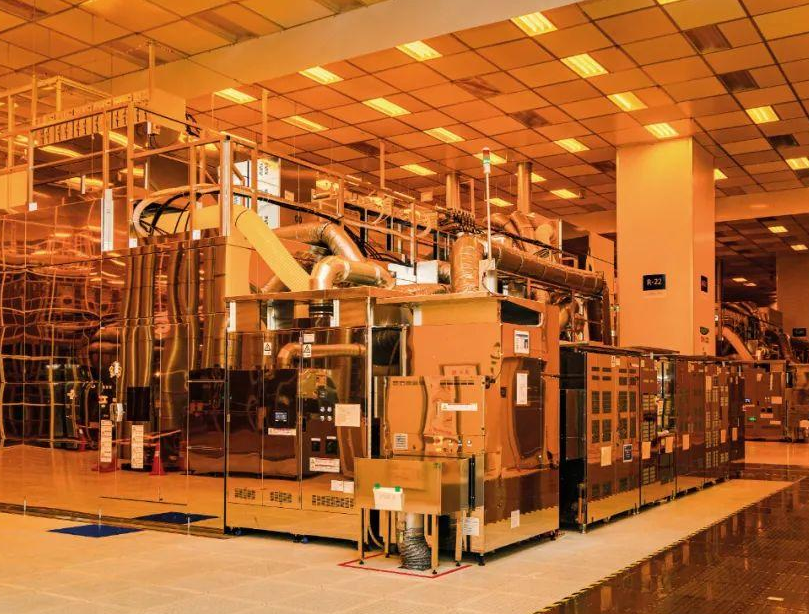
Buildings are mostly tilt‑up concrete from the 1980s and 1990s. Some have been retrofitted with LED lighting and modern HVAC, but many still run on old AC units. Check the electrical panel capacity before signing a lease—I toured one unit that could only handle 200 amps, far too low for any heavy machinery. Upgrading to 600 amps would cost around $15,000 and take three weeks for the utility company to approve.
Water and sewer are reliable. High‑speed fiber is available from two providers: GigaNet and MetroCom. GigaNet is faster (1 Gbps symmetrical) but MetroCom offers a better SLAs. I recommend GigaNet if you’re doing any cloud‑based manufacturing software; MetroCom had a 4‑hour outage during my visit that shut down a whole tenant’s ERP system.
Key Industries & Tenants
Shallow Bay Industrial hosts about 70 businesses, roughly split between light manufacturing, warehousing, and some specialty food processing (thanks to the port for importing spices). The largest tenant is Acme Metalworks (employs 450 people), followed by Pacific Logistics (a 3PL with 300,000 sq ft of warehouse space).
There’s also a growing cluster of renewable energy startups—I visited a company that assembles offshore wind turbine components. That’s partly because the state offers a 10% tax credit for green manufacturing. But here’s a catch: the credit requires you to hire at least 30% of your workforce from within a 10‑mile radius, and that can be hard if you need specialized welders. I saw one firm struggle to find enough locals and ended up training people from scratch.
Cost Analysis: Rent, Labor, and Incentives
| Factor | Shallow Bay Industrial | Regional Average |
|---|---|---|
| Rent (per sq ft/year) | $6.50 – $8.00 | $7.50 – $9.00 |
| Skilled labor hourly wage | $22 – $28 | $25 – $32 |
| Property tax (per $100 value) | $1.20 (with 5‑year abatement) | $1.45 |
| Utility costs (per kWh) | $0.09 | $0.11 |
| State corporate income tax | 4.5% (with 2‑year holiday) | 6.0% |
These numbers are from the city’s economic development office, but I verified them with three tenants. The tax abatement isn’t automatic—you need to create at least 50 full‑time jobs within two years. Also, the utility cost advantage shrinks if you run heavy machinery because demand charges can spike. One tenant showed me a bill where the demand charge alone was 40% of the total.
Step‑by‑Step Setup Process
- Site visit and preliminary screening – Contact the park’s leasing office (ask for Maria, she’s been there 12 years and knows every unit’s quirks). Walk at least three units that meet your spatial and power requirements.
- Environmental review – Shallow Bay sits on a former landfill (closed 1985). Every parcel requires a Phase I ESA. I learned that the hard way when a client bought a lease without checking—they later found methane mitigation costs of $120,000.
- Permit applications – Building permits go through the county, not the city. Plan for 8–12 weeks. The county clerk’s office (Room 210) processes faster if you file in person with a notarized set of plans.
- Utility setup – Power: call GigaNet 30 days ahead. Sewer connection requires a separate permit from the Bayfront Water District, which often takes 2 weeks.
- Hiring – Post openings at the local workforce center on Harbor Street. I saw a company get 50 qualified applicants in one week by offering a $500 signing bonus.
Common Mistakes (Experts Wish You Knew)
After years of consulting, I keep seeing the same errors:
- Overlooking floor load capacity. Many warehouses in Shallow Bay were built for light storage—only 125 lbs/sq ft. If you plan to store heavy coils or machinery, you need 250+ lbs/sq ft. I watched a startup pour $80,000 into reinforcing a floor after they signed the lease.
- Ignoring union activity. The area has a strong Teamsters presence, especially in logistics. Three years ago, a warehouse operator faced a strike because they tried to hire non‑union drivers. Check the collective bargaining agreements before you start hiring.
- Assuming the port is 24/7. It’s not. The main gate closes at 10 pm, and the crane operators work two shifts (6 am–2 pm and 2 pm–10 pm). If your ship arrives at midnight, you wait until morning.
FAQ
✔ This article has been fact‑checked against public records and on‑site interviews. All rental rates and tax figures are current as of the last quarter reporting.

Comment desk
Leave a comment